

ADR Training - Chapter 1.3
What is ADR §1.3?
What the regulations say
ADR 1.3 training is compulsory for all those involved in the dangerous goods transport chain . This includes packing, shipping, loading, routing, handling, etc. Drivers of vehicles transporting dangerous goods may also be concerned, depending on the volume of goods transported. Above a certain volume, road drivers are subject to training in accordance withADR Chapter8.2 of this Agreement.
Our role: Securing your transport
Our training courses on Chapter §1.3 of the ADR ensure that everyone is aware of the ADR Agreement, and that your staffare better informed of the procedures to be followed beforehand, as well as in the event of an incident.
The training courses we
offer you
These training courses for the transport of dangerous goods aim to :
- Make your organization compliant with legislation, and thus avoid penalties
- Enable everyone to identify the risks associated with TDG, and know how to control them
- Make your employees operational in the event of an incident
- Improve customer satisfaction by ensuring that employees with a better knowledge of TDG and ADR are able to respond more accurately to customer queries.
- Identify and interpret all movements in the dangerous goods transport chain
- Be proactive in risk prevention and road transport safety
To meet all these challenges, APTH-BVT offers a range of ADR 1.3 training courses:


Drivers not subject to ADR certification


Would you like
or customized training?
In particular, we cover the following topics



The advantages of ADR training Chapter §1.3
HANDLE THE adr
Help your employees to identify risks more independently by handling ADR books.

optimized learning
Our experts in ADR regulations and the road transport of dangerous goods adapt our materials as soon as the UN makes adjustments.

COMBINE PRACTICE AND THEORY
Take a TDG training course that combines theory and practical exercises to help you master the subject and immerse your employees in real-life conditions.
ADR training - We answer your questions
-
How long does ADR 1.3 training last?
The duration of ADR Chapter 1.3 training courses varies. Firstly, if it's your first awareness training or simply a refresher course, and secondly, depending on the profile of the trainee to be trained.The duration of ADR Chapter 1.3 training varies. Firstly, whether it is an initial awareness course or simply a refresher course, and secondly, depending on the profile or profession of the trainee to be trained.
-
What is the difference between ADR Chapter §1.3 and ADR Chapter §8.2?
These two chapters of the ADR Agreement are both devoted to the training obligations of persons involved in the road transport of dangerous goods, but do not address the same public.
- Chapter §8.2 of the ADR concerns exclusively drivers of dangerous goods by road. This chapter includes certifying courses which enable learners who pass the final exam toobtain an ADR Card. This Card, or ADR Certificate, is compulsory to drive a vehicle containing dangerous goods.
- Chapter §1.3 of the ADR is aimed at all other people involved in the transport of dangerous goods who are not drivers (packers, handlers, administrative staff, etc.). This training is compulsory, but does not lead to certification. Only a certificate of completion will be issued at the end of the course.
-
Can training in Chapter 1.3 of the ADR be carried out remotely?
Unlike ADR - Conducteurs Routiers de Marchandises Dangereuses training courses, Chapter §1.3 training can be carried out remotely. We invite you to contact us if this learning format is more suitable for you. -
Who are the personnel concerned by training under Chapter §1.3 of the ADR?
In accordance with Article 1.3 of the ADR Agreement and the IMDG Code, all those involved in the transport of dangerous goods must receive training appropriate to their duties and responsibilities. A different level of training applies to each participant. These ADR 1.3 training courses cover the risks and hazards involved in transporting dangerous goods. This initial session must be periodically supplemented by refresher training in ADR 1.3, every 2 years.
"Employees must be trained in accordance with chapter 1.3.2 before assuming responsibilities, and may only perform duties for which they have not yet received the required training under the direct supervision of a trained person."
-
How do I know if one of my employees is affected by ADR regulations and Chapter 1.3?
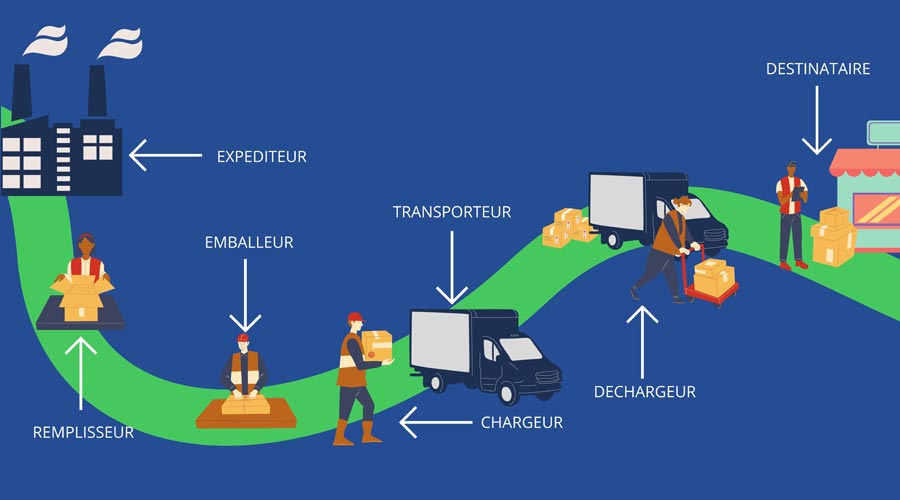
All those involved in the transport chain, from the shipper to the packer, via the carrier to the consignee, must be trained in ADR 1.3. It is important to be aware that at each stage of the handling of goods, there are obligations and recommendations to ensure the safety not only of the personnel involved, but also of their environment, while preserving the integrity of the goods.
These courses may also
of interest to you


The professions of
APTH-BVT

TRAIN

certify

control
Our training courses
Make participants rapidly autonomous and operational on leaving the course