
Load securing
What is docking?
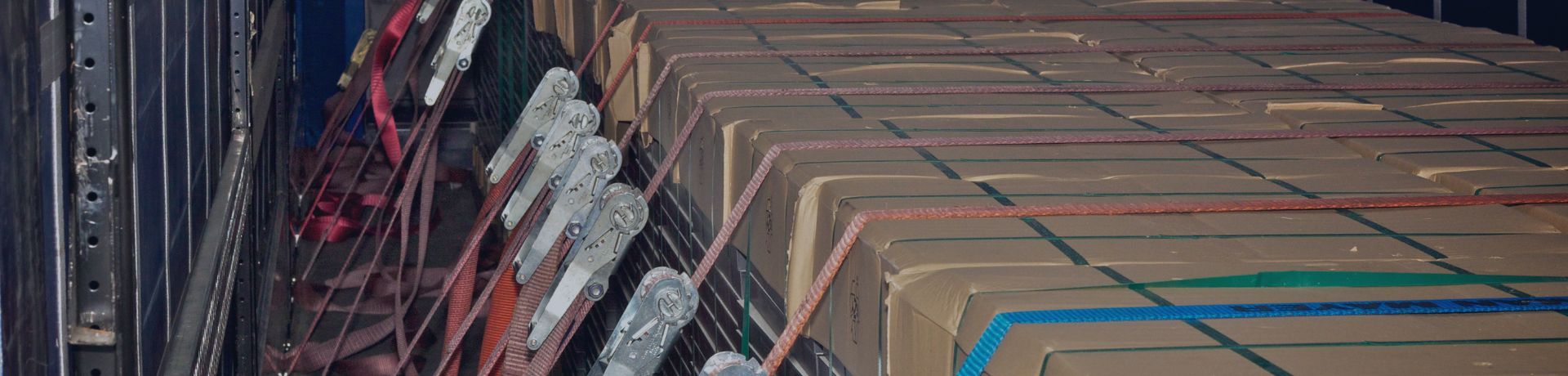
Load securing refers to all the methods and equipment used to hold goods securely in place during transfer. The aim is to prevent any movement (slipping, tipping, etc.) which could lead to loss of control or the vehicle tipping over.
This practice is necessary to protect the driver, road users, your goods and the environment. It's a key factor in transport safety.
There are many techniques and devices for securing a load: straps, chains, wedges, blocking bars or even nets. Any tool that can counterbalance the forces exerted during driving (acceleration, braking, jolting, etc.) can be used to limit the sudden movement of goods.
What the regulations say
Article R312-19 of the French Highway Code imposes specific obligations concerning vehicle loading, in order to guarantee road safety. This article covers a number of subjects, including load stability, risk prevention during transport, compliance with transported quantity limits, and driver liability.
The Article specifies that "I.- All necessary precautions must be taken to ensure that the load of a vehicle cannot be a cause of damage or danger". For goods transport operators, this means ensuring that they have mastered the concepts of securing and blocking their loads in order to reduce the risks associated with the transfer of these goods.
Our role: securing your transport

Our mission is to support you in the training of all your employees involved in load securing. Using a teaching method combining theory and real-life exercises, we aim to make your teams autonomous and fully aware of the specific requirements linked to cargo securing, as specified in Article R312-19 of the French Highway Code.
Cargo securing in accordance with the ADR Agreement
Chapter 7.5.7 of the ADR requires dangerous goods to be stowed in accordance with standard EN 12195.
Our training courses, based on the requirements of Chapter 7.5.7 of the ADR, enable everyone to understand the importance of rigorous stowage of dangerous goods, as well as the procedures to be followed before departure and in the event of an incident. As a result, your drivers and loaders are better prepared to guarantee safe and compliant transport.
Our training courses
Our load securing training courses are designed to :
- Ensure that your structure complies with regulatory requirements
- Enable everyone to identify the specific risks associated with inadequate cargo securing, and to master them effectively.
- Enable your employees to carry out compliant and safe stowage.
- Be proactive in preventing the risks associated with inadequate stowage, and enhance the safety of your road transport operations.
Our services are aimed at three main activities:
- Transport of general goods, packaged in parcels
- Transport of dangerous goods, packaged in parcels
- Transfer of public works equipment and other construction tools


Benefits of our Stevedoring courses

CUSTOMIZED TRAINING

TRAINING AT HOME

PRACTICE AND THEORY
Load securing - we answer your questions
-
1. What is load securing in road transport?
Load securing involves securing goods in a vehicle to prevent them from shifting during transport. Good securing techniques reduce the risk of accidents and material damage, and ensure compliance with European regulations (standard EN 12195-1). -
2. Why take load securing training?
Training in load securing enables drivers and loaders to master best practices, understand legal obligations, and use equipment correctly (straps, tie-down bars, nets, etc.). It contributes to road safety and the prevention of occupational accidents. -
3. Is load securing training compulsory?
In France and the European Union, employers have a duty to achieve results in terms of load securing. Ensuring this result involves training employees. Certain activities, such as the transport of dangerous goods, require enhanced training. -
4. What equipment should be used to secure a load?
Depending on the nature and weight of the goods, the following can be used:
- Ratchet straps
- Lashing chains
- Lashing bars and posts
- Nets and tarpaulins
Choice depends on vehicle type, cargo and regulatory requirements.
-
5. Who should take the road transport stowage course?
The course is aimed primarily at truck drivers, shippers, logistics managers and anyone else involved in loading/unloading goods. -
6. Does load securing training include a practical part?
Yes, effective training combines theory (regulations, physical principles) and practice (demonstrations, vehicle tie-down exercises).
The professions of
APTH-BVT

TRAIN

certify

control
Our training courses
Make participants rapidly autonomous and operational on leaving the course